
The following interview is the first in a series that explores how individuals and organizations have been adversely impacted by the Trump presidency—and how they are organizing and resisting.
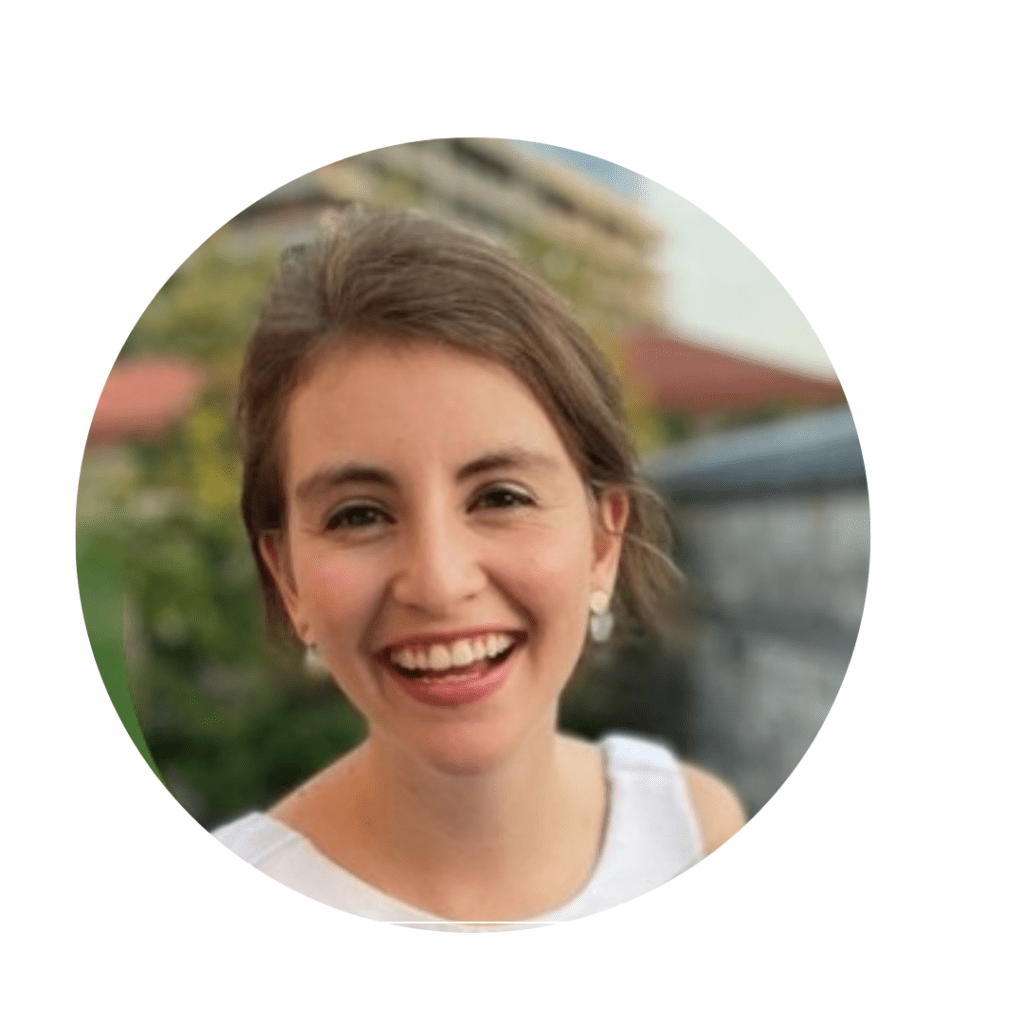
Mariana Gama is a humanitarian storyteller who engages closely with children, refugees, and marginalized communities using a trauma-informed approach to ensure ethical interviewing and dignified storytelling. In this interview, Mariana discusses her career path, her approach to ethical storytelling, how recent funding cuts are harming immigrants and refugees, and how you can get take action.
Can you describe your background and career journey? How did you become interested in refugee and immigrant rights?
My family immigrated to the U.S. from Colombia when I was about five years old, and because of this, immigration has always been central to my identity. Since I was a child, my parents made sure my siblings and I knew where we were from and instilled a passion for philanthropy in us. Every year that we visited Colombia, we would bring suitcases packed to the brim with donations and often spent our visits going to orphanages and schools in impoverished areas. These visits gave me an understanding of both suffering and human dignity and helped me develop a core value of caring for others.
What some may consider a “bleeding heart” eventually became a career for me. I graduated with a bachelor’s in International Studies and landed my first job at a refugee resettlement organization called Refugee Services of Texas. While at times we were frankly overworked and underpaid, I truly loved this job because of the people I served. In each refugee I met, I saw a bit of me, and I developed a deep care for each of my clients. When the organization I was working at was no longer a good fit for my career, I landed my dream job in communications at Church World Service (CWS) where I was able to continue serving others while exploring my creative side.
Which people, places, books, and/or films have inspired you?
A book that I think about often and inspired the way I live my life is The Choice by Doctor Edith Eger. In a magical sort of way, this was the last book my grandmother read before she passed away and it popped up in a moving box one day in my aunt’s apartment, sparking my entire family to read it. Dr. Eger is a survivor of the Holocaust and world-renowned psychologist who has taken her horrific experiences in Auschwitz to help her patients liberate themselves from “the prison of their own minds”. It’s so beautiful and remarkable how she has transformed such tragedy into healing. The resilience with which she lives echoes the stories I have heard in my career working with refugees. There’s a quote in the book that says: “Suffering is inevitable and universal. But how we respond to suffering differs” (pg. 170).
The response to suffering that I have seen in my work with refugees never ceases to amaze and inspire me. I’m reminded of a now-dear friend named Amina who I met while volunteering at Posada Esperanza, a refugee and immigrant shelter. Amina fled the war in the Democratic Republic of Congo and arrived in the United States when she was pregnant with triplets. She gave birth just a couple of weeks after arriving and didn’t know a single person in Austin, which is how she and her three daughters ended up at the shelter I was volunteering at.
Stories have the power to break through the noise and reach people at their core.
Seven years later, Amina is a homeowner, a board member of Posada Esperanza, and an accountant at a private school, which all of her daughters attend for free. Even though Amina continues to face hardships, she has never stopped moving forward. She has given herself entirely to her beautiful daughters, who are now chatty, confident and cheerful American elementary schoolers.
Just this week, I saw the family and we did a fun photo shoot, which felt like a full circle moment since seven years ago I had done a shoot for them at the shelter. For this shoot, the girls wore bright pink and Amina wore white. I don’t think they could have picked better colors to match their energies!

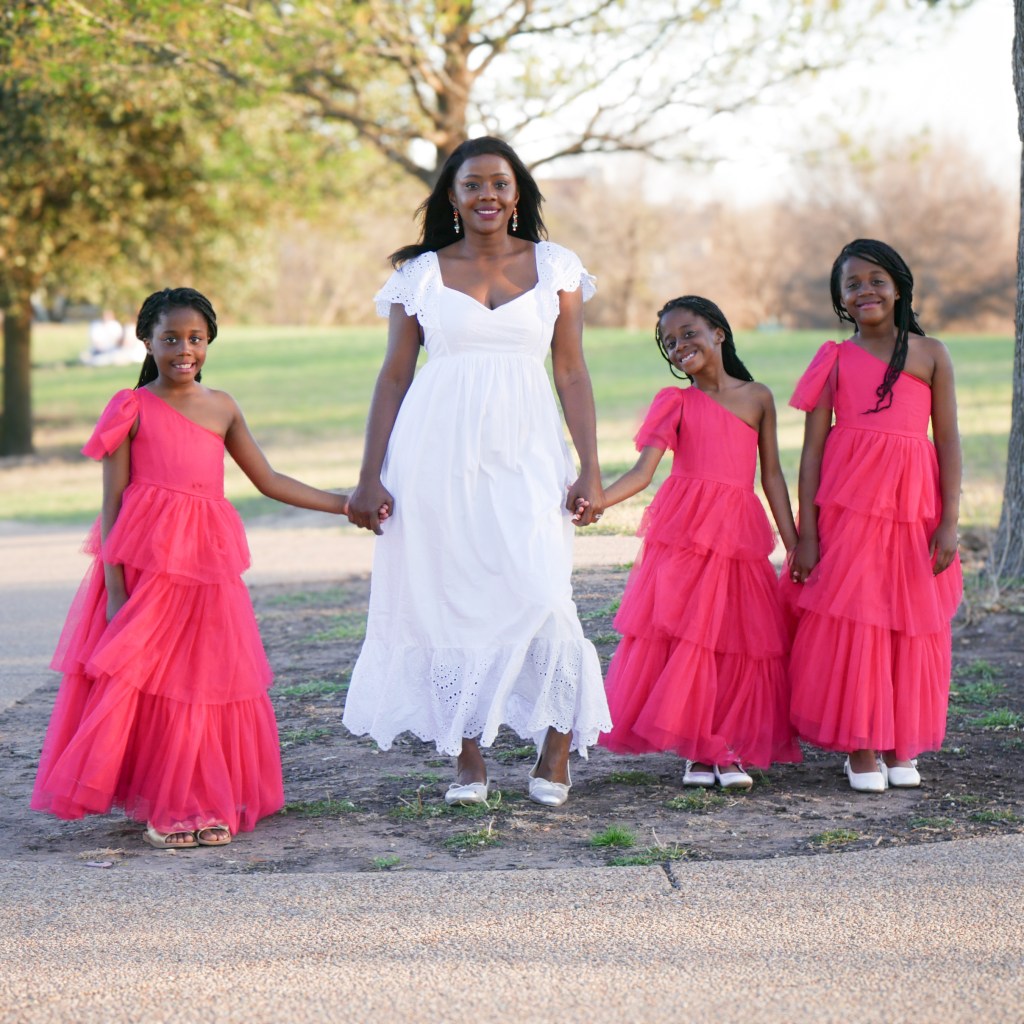
Amina fled the Democratic Republic of Congo due to war and arrived in the United States when she was pregnant with them.
What led you to Church World Service? What have you been most proud of and what have been some challenging aspects of your work?
I first found out about Church World Service because the organization was one of our funders at Refugee Services of Texas. At the time, I was interested in exploring other avenues in my career, specifically ones that allowed me to be more creative. I applied to my current role in communications, and when I was being interviewed, I had one of those movie-like moments where I felt like I had just found my dream job. Not only was the role exactly what I was looking for, but the values my colleagues shared during the interview made me feel so excited about the opportunity to work somewhere where I’d be seen as more than just an employee.
What I’m most proud of from my time at CWS is the ethical storytelling that I helped develop. A lot of humanitarian organizations, especially ones that are faith-based, often use harmful techniques for communications that veer into white saviorism, beneficiary mindset, and “poverty porn.” While in good faith, these techniques often diminish the individuals whose stories are being shared and can create harmful stereotypes. At CWS, my team and I developed clear outlines for ethical storytelling and I spearheaded specific trainings on trauma-informed interviewing and communications work involving children. I feel very proud of the story process I developed, starting from the moment I met and interviewed the individual to the final product.
One of the challenges I faced at CWS and in other jobs was the dependency of our work on the current president. I remember showing up to work at RST during Trump’s first presidency and hearing whispers about a new program being cut or resettlement being shut down. At CWS we have experienced this challenge at an astoundingly accelerated rate. Unfortunately, as a 501(c)(3) organization, we are also limited in what we can and can’t say about the government (for example, we are allowed to criticize policies but not a specific candidate). This made it difficult to do our job during recent elections and when the new administration came into office, we were in constant fear of saying the wrong thing, which would put a target on our organization.
How is storytelling—and in particular, social impact storytelling— a lever for change? Which stories from your work stand out the most to you? Which stories challenge misconceptions that people may have about immigration to the United States?
On my team at CWS, we had the slogan “Tell stories, change the world,” and this is something that I truly believe. Storytelling has been a part of who we are for as long as humans have existed and because of this, stories have the power to break through the noise and reach people at their core. They focus on the human element and can change minds and move hearts toward a specific call to action. It’s different, for example, for me to speak with someone who is on the opposite side of the political aisle and tell them “I’m pro-immigrant” than to say “let me tell you about this real person with a real story who you will be able to relate to on a human level…”
One of the stories that really stands out to me is Denia and Yordy’s story, which I wrote in December 2024. Denia and Yordy are a mother-and-son duo who fled Honduras when their lives were threatened by local gangs. Yordy is non-verbal and unable to move from the neck down, so Denia had to carry him the entire time, at one point carrying him on her back for four hours across a desert. The story is remarkable because of the unbreakable bond between the two and the immense strength they displayed on their journey.
It also challenges two major misconceptions about immigration in the United States. The first is who immigrants are. Words like “criminal” and “gang member” are thrown around so freely and inhumanely that people don’t realize that it’s often mothers and children like Denia and Yordy, just trying to survive, who are affected by the government’s cruel anti-immigration policies. It’s hard for me to believe that anyone with a heart who reads their story would be on board with the existing policies that threaten Denia and Yordy’s right to a life in the U.S.
The second misconception is that organizations like CWS are not necessary. If you read Denia and Yordy’s story, you will clearly see the support they still need to find their footing in this new home. These programs are often life-saving for so many individuals and to see them get cut with so little thought or care is horrifying.
The Trump administration has halted, paused, or minimized many federally funded activities that support immigrants and refugees in the United States. Which impacts have you experienced and seen firsthand? Which impacts have you heard about?
When Trump first came into office, we were nervous about the cuts he would make to resettlement and humanitarian aid but I don’t think we imagined the scope and speed with which he ultimately executed his plans. Within just a couple of weeks of Trump’s inauguration, we received a stop-work order that prevented CWS from delivering critical services to thousands of refugees both in the U.S. and around the world. By late February, CWS had to furlough about two thirds of staff, including myself. Just recently, many furloughed and active staff members were notified that they have been officially laid off.
The most heartbreaking thing has been to see how despite not knowing how they will pay for their next bill, staff members have continued to prioritize those we serve. When we were notified about the furloughs, our Teams chats were overflowing with frantic staff asking if they could work for free or volunteer. Many said things like “my clients need me, I can’t just disappear.” These cuts are affecting families and individuals who have already been resettled in the U.S. and have now been left stranded.
I’ve heard stories of Afghan children who were separated from their parents in the chaos of the Kabul airport and have had their flights canceled following the resettlement freeze. A handful of our global programs have also been abruptly terminated, leaving already struggling local partners abandoned. The administration hastily and heartlessly moved to cut these programs and the only ones who truly understand the severity of this action are the employees delivering services and those who have been told they can no longer receive them.
How can people who are concerned about immigrant justice take action?
The most important thing you can do right now is to donate to organizations that are working with immigrants and refugees who are just trying to stay afloat amidst funding cuts. If you have time and skills, you can also reach out to local organizations that support immigrants and offer to volunteer.
In the long term, getting involved in your local government is so important and underestimated. Midterm elections are in 2026, and people need to go out and vote to retake congressional control.
Featured Image by Vinod Kumar Mavilla from Pixabay
 Open Americas