Image: picryl

By Sarah Pachal

People in the Northern Hemisphere may associate April with spring-like weather, but in Southern Quebec and Ontario, April brought an ice storm that shut cities down for days and resulted in one man dead. As we experience record-breaking heatwaves, terrible wildfires, and catastrophic storms like this, it is obvious that climate change is a contemporary reality rather than a distant threat. The evidence is clear: human activity is causing our planet to warm at an alarming rate, with disastrous consequences.

During the rainstorm that began on April 5, between 20 mm and 25 mm of ice collected on trees and buildings and 1.1 million Quebec residents were without electricity, some for days. 

Image: Project Syndicate

By Jorge Heine

Already struggling to get out of its deepest economic downturn in 120 years, Latin America now must brace for the possibility of another Donald Trump presidency. Judging by the Republican candidate’s campaign promises and longstanding positions on trade and immigration policy, the implications would be dire.

After the euphoric Democratic National Convention in Chicago, there is little doubt that Kamala Harris’s candidacy has changed the dynamics of the 2024 US presidential race. Democrats now have a fighting chance, which is more than they could have said a few months ago. However, with polls still showing an extremely close contest in the seven swing states that ultimately matter, the rest of the world must brace for what Donald Trump’s return to the White House would entail.

Image: Project Syndicate

By José Antonio Ocampo

Latin America’s economies continued to be the worst-performing in the developing world in 2023. To boost economic growth, the region’s political leaders must increase their investments in science and technology, foster regional integration, and reaffirm their commitment to democratic governance.

Latin America has come to the end of its second lost decade of development. Average annual growth hovered just below 0.9% for the 2014-23 period – worse than the 1.3% rate in the 1980s. GDP per capita, however, is projected to be slightly higher in 2023 than in 2013, owing to slower population growth. By contrast, it was not until 1994 that the region’s GDP per capita returned to its 1980 level. Still, Latin America has a severe growth problem.

Image: Project Syndicate

By Mercedes D’Alessandro

It may seem obvious to a layperson that failing to support an economy’s labor force must come at a cost. Yet conventional economic models render nearly invisible – or simply wave aside – a dimension of inequality that pervades economic policymaking and macroeconomic outcomes.

Not everyone has lost out from the “polycrisis” that we are now enduring. Perversely, both extreme wealth and extreme poverty have increased simultaneously for the first time in 25 years. Worse, a host of other problems also now demand our immediate attention – from high and rising debt and increasing job precarity to inflation, climate change, and food insecurity.

To reconfigure our economies for growth and sustainable development, we must go back to the intellectual drawing board to identify elements of economic theory and practice that have been overlooked. For example, even though the pandemic exposed deep flaws in how we think about care, many governments and businesses continue to neglect this dimension of the economy.

Evaristo Sa/AFP via Getty Images

Por Andrés Velasco

Los latinoamericanos tenemos muchos talentos. Uno de ellos es la notable aptitud para gobernarnos mal, como lo ha puesto de manifiesto la pandemia. Seis de los 20 países con más muertes per cápita del mundo a causa del Covid-19 se encuentran en América Latina. Perú encabeza la lista y Brasil ocupa el octavo lugar.

Sin duda que la pobreza, la escasez de camas en los hospitales, y las hacinadas condiciones de vivienda, contribuyeron a la diseminación del virus, pero estos factores por sí solos no explican por qué la región lo ha hecho tan mal. Muchas naciones de Asia y de África padecen de los mismos problemas, pero sufrieron menos muertes per cápita. Incluso países que vacunaron a su población tempranamente, como Chile, –o que al principio de la pandemia parecían exitosos, como Uruguay– han terminado con un desempeño mediocre.

Image: Project Syndicate

By Jeffrey Frankel

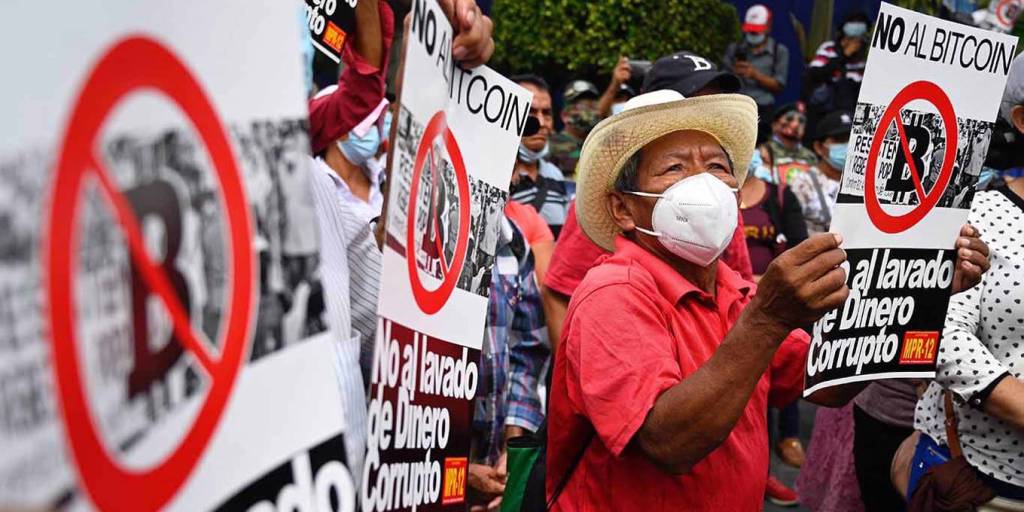
Many aspects of cryptocurrencies are baffling, not least the success of a joke like Dogecoin. But El Salvador’s recent adoption of Bitcoin as legal tender alongside the US dollar is perhaps the strangest and potentially most worrying example of all.

El Salvador this month [September 2021] became the first country to adopt a cryptocurrency – in this case, Bitcoin – as legal tender. I say the first, because others might follow. But they should think twice, because the idea is highly dubious – and likely to be economically dangerous for developing countries in particular.

I will admit that I don’t understand the need for cryptocurrencies at all. Like many economists, I fail to see what problem they solve. They aren’t well designed to fulfill any of the classic functions of money – a unit of account, store of value, or means of payment – because their prices are so extraordinarily volatile. This volatility is not surprising, because cryptocurrencies are backed neither by reserves nor by the reputation of a well-established institution, such as a government or even a private bank or other trusted corporation.

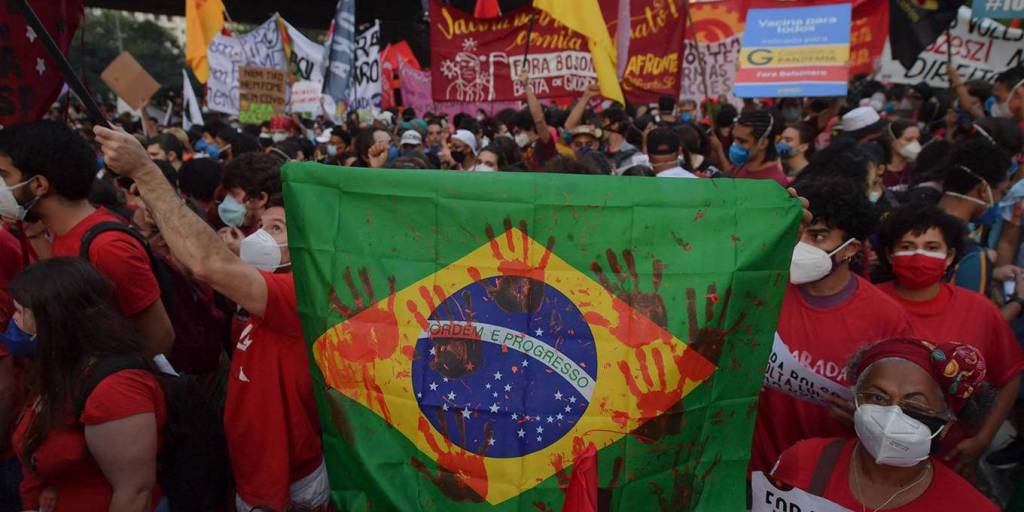
Demonstrators take part in a protest against Brazilian President Jair Bolsonaro’s handling of the COVID-19 pandemic in Sao Paulo, Brazil on May 29 2021. (Photo by NELSON ALMEIDA / AFP) (Photo by NELSON ALMEIDA/AFP via Getty Images)

By Kenneth Rogoff

Most of Latin America is still far from the horrific conditions prevailing in Venezuela, where output has fallen by a staggering 75% since 2013. But, given the ongoing humanitarian catastrophe there, and the specter of political instability elsewhere, investors should not take a sustained economic recovery for granted.

The current disconnect between market calm and underlying social tensions is perhaps nowhere more acute than in Latin America. The question is how much longer this glaring dissonance can continue.