
Image: Project Syndicate
By Carlos Alvarado Quesada
Guatemalan President Bernardo Arévalo’s recent selection of an honest successor to a corrupt attorney general represents a decisive victory for the country’s democracy. Arévalo succeeded not because he abandoned institutions to save democracy, but because he trusted institutions enough to work through them.
After two years of fierce political battles, Guatemalan President Bernardo Arévalo finally managed to appoint a new attorney general in May. In replacing a corrupt prosecutor with an honest one, Arévalo demonstrated that, even after years of erosion, democracy can prevail if political leadership chooses constitutionalism over confrontation.
International observers are often so focused on democratic breakdowns that they overlook democratic breakthroughs. But Guatemala’s recent struggle deserves far greater attention. After Arévalo won the August 2023 runoff by a wide margin, the Public Ministry, under Attorney General Consuelo Porras, challenged the results, launched legal actions against Arévalo’s party, Movimiento Semilla, and pursued investigations that were widely viewed as attempts to block the transfer of power.
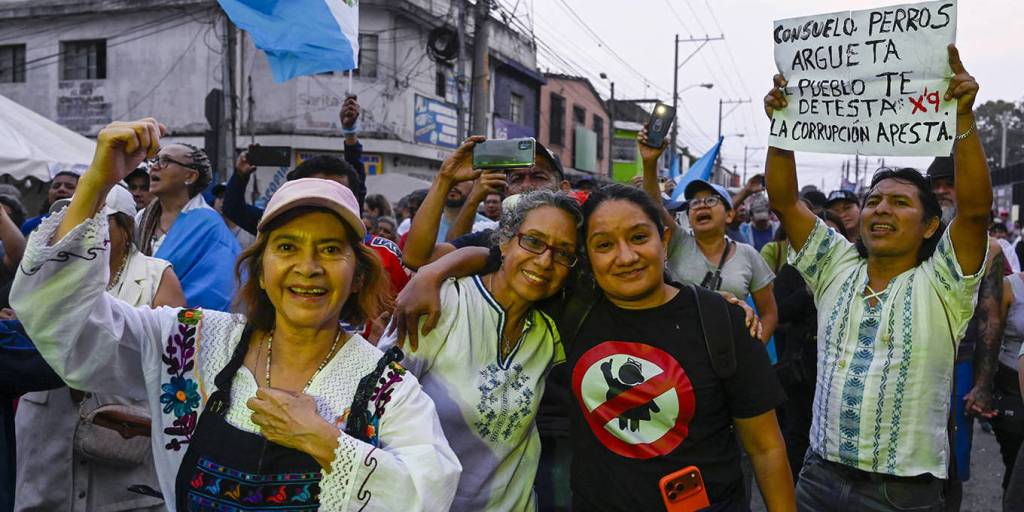
But Indigenous authorities and civil-society organizations launched massive peaceful demonstrations to demand that the election’s outcome be respected. Their efforts, together with growing international pressure, proved powerful. After months of uncertainty, which extended into inauguration night, Arévalo was finally sworn into office in January 2024.
Yet Guatemala’s democratic struggle was just beginning. This year, another decisive moment for the country’s institutions arrived: it was time to select new magistrates for the Constitutional Court (replaced every five years), members of the Supreme Electoral Tribunal (replaced every six years), and, perhaps most important, the next attorney general (who serves a four-year term).
Porras’s eight-year tenure was controversial not only because of the Public Ministry’s response to Arévalo’s election. Under her leadership, the autonomous body was accused of undermining anti-corruption efforts, weaponizing the justice system against critics, and obstructing democratic processes. Hundreds of people—including journalists, anti-corruption prosecutors, judges, Indigenous leaders, and civil-society figures—were forced into exile during this period.
Others—notably, the journalist José Rubén Zamora, founder of El Periódico, and Indigenous leaders Luis Pacheco and Héctor Chaclán—were prosecuted or imprisoned on dubious charges. Porras faced sanctions from Canada, the European Union, the United States, and many other international actors for undermining the rule of law.
Against this backdrop, the process of choosing a new attorney general was subjected to intense national and international scrutiny. Under Guatemala’s constitution, the president selects the attorney general from a six-candidate shortlist prepared by a 15-member nominating commission composed primarily of university authorities, bar-association representatives, and judicial officials.
Pressure groups mobilized to shape this selection process. These included powerful political and economic networks that feared the loss of a longstanding bulwark against accountability. Also among them were civil-society organizations, Indigenous authorities, academic representatives, and international actors, who demanded transparency, institutional independence, and an end to the criminalization of anti-corruption activists.
Throughout the process, Arévalo’s administration consistently emphasized adherence to Guatemala’s constitutional framework and legal procedures—an unwavering commitment that both supporters and detractors have criticized as a weakness. But it proved essential to keep the attorney-general selection process fully democratic and constitutionally grounded, despite intense political pressure and repeated attempts to destabilize the transition.
Finally, after weeks of deliberation and public scrutiny, Arévalo received the shortlist, from which he selected Gabriel Estuardo García Luna. This marked a decisive democratic victory—proof that, even under difficult conditions, constitutional processes can still prevail. Indeed, Arévalo succeeded not because he abandoned institutions to save democracy, but because he trusted institutions enough to work through them.
This achievement is particularly extraordinary in Guatemala, which returned to democratic rule in 1986 after decades of authoritarianism and ended its 36-year-long civil war only in 1996. But its significance extends further. At a time when Central America is struggling with democratic backsliding and institutional capture, Guatemala’s resilience offers an encouraging message to the rest of the region—and to democracies worldwide.
The path ahead is beset with challenges. Arévalo’s administration, including the new attorney general, must continue restoring and strengthening the country’s democratic institutions, which will again be tested in the 2027 general election. Nonetheless, a promising new chapter in Guatemalan democracy has begun.
This article has been republished through a partnership with Project Syndicate, which produces and delivers original, high-quality commentaries to a global audience. It features exclusive contributions by prominent political leaders, policymakers, scholars, business leaders, and civic activists from around the world, providing news media and their readers cutting-edge analysis and insight, regardless of ability to pay.

