Image: Project Syndicate

By Sonia Guajajara

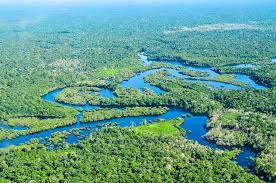
As co-hosts for this year’s United Nations Climate Change Conference in Belém, the Indigenous peoples and local communities of Brazil’s Amazon region understand what is at stake and will be given a greater voice than ever before. That is good news not only for these communities, but for everyone.

This year’s United Nations Climate Change Conference (COP30) in Belém, Brazil, has been eagerly awaited worldwide. A COP in the Amazon raises expectations for all those who recognize the urgency of climate change and its impact on our lives and environment. That is why Brazilian President Luiz Inácio Lula da Silva is calling this the “COP of Truth.”

Image: Project Syndicate

By Robin Willoughby and Nico Muzi

Demographic, environmental, and consumer factors have brought the global agriculture sector to a crossroads. To avoid political hazards, decision-makers in government, industry, and civil society will need to heed the lessons from major transitions in other industries and start preparing.

Disruption is coming to the agriculture sector. Around the world, livestock farmers are leaving the land, policymakers are targeting the harmful environmental and social effects of industrial meat production, and consumers are shifting away from meat to embrace healthier, more sustainable alternatives. With the sector approaching a crossroads, decision-makers in government, industry, and civil society will need to heed the lessons from major transitions in other industries and start preparing.

Image: Flickr

By Maggie Wang

This article was originally published here on Human Rights Pulse on April 21, 2021.

“If I become President, there will not be another centimeter of indigenous land [demarcated].”

This statement and statements like it—including several where “centimeter” was replaced by “millimeter”—cropped up frequently in the campaign rhetoric of Brazilian president Jair Bolsonaro. Bolsonaro’s far-right populism and militaristic disregard for minority groups—including Indigenous nations, Black Brazilians, and LGBTQ+ people, among others—have made him immensely popular. It has also made him one of the greatest dangers to environmental conservation and the advancement of Indigenous rights. His presidency has seen large-scale destruction of Brazil’s Amazon Rainforest and encroachment on Indigenous lands by mining and logging companies. Yet, the centrality of Indigenous groups to Bolsonaro’s anti-environment campaign makes them key stakeholders in any effort to protect the Amazon. Since Indigenous rights and conservation are so closely interlinked, it is crucial that conservationists recognize the invaluable knowledge of Indigenous leaders.

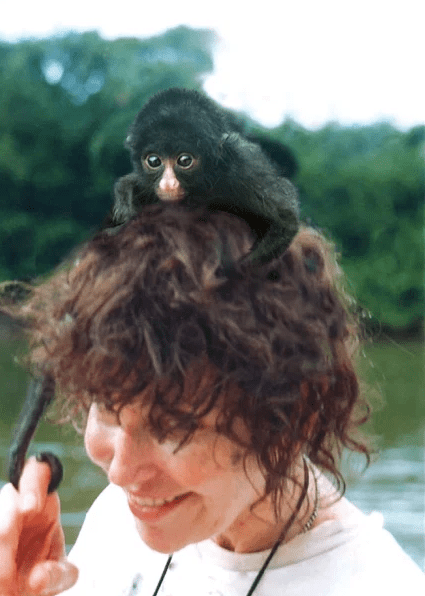
Barbara Crane Navarro is a French artist, author, and activist who currently lives near Paris. Over a period of 12 years, she spent the winter months with the Yanomami people in Venezuela and Brazil, an experience which has inspired her artistic practice and her decades-long effort to draw attention to the devastation of the Amazon Rainforest. From creating burning art installations to writing and illustrating a children’s book series, Crane Navarro is a prolific artist who has the power to instill a sense of urgency, responsibility, and connectedness in all those who interact with her creations. 

We spoke with her about her biggest inspirations, what she is currently working on, and what makes the rainforest invaluable. 

The following photos belong to Barbara Crane Navarro and have been republished with her permission.


By Jessica Turner

This piece was originally published on defineearth.com.

Imagine waking up one day to the news that your land, which you and your tribe have subsisted on for generations, has been sold by the government to someone else. In return, you will be moved to a small plot of land without the same kinds of resources as before. This loss of land creates a domino effect of loss in other areas such as income, traditional environmental knowledge, and general stability. Through green grabbing, government entities or private investors use their power over Indigenous and Afro-descendant groups to confiscate land under the guise of environmental conservation.

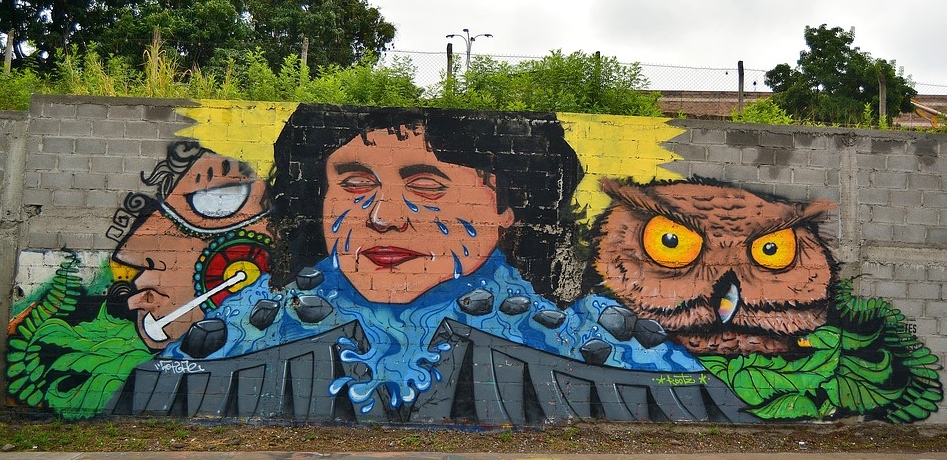
Graffiti_Berta_Tegucigalpa

By Lewis Harrison

This piece was originally published on Lewis on Latin America.

Across Latin America, the centuries-old issue of land conflict is gaining new dimensions as nations are increasingly bound into globalised supply chains of resources, food and energy (Peluso & Lund, 2011). The growing influence of corporate actors has transformed struggles over who has the right to inhabit and work the land, as states respond to competing claims from powerful enterprises and rural residents, who are often poor and indigenous. This essay will examine how the authorities in Chile and Honduras have repressed the protests of communities against the appropriation or contamination of their lands by these commercial interests. Despite the many differences between these countries – Chile being one of the most peaceful and prosperous nations in the Americas, Honduras one of the poorest and most violent – they share many similarities in this respect. Via a process that Bessant (2016) calls the ‘criminalisation of dissent’, their governments have prohibited rural activism through authoritarian legislation and violence in order to serve the interests of powerful national and multinational corporations.