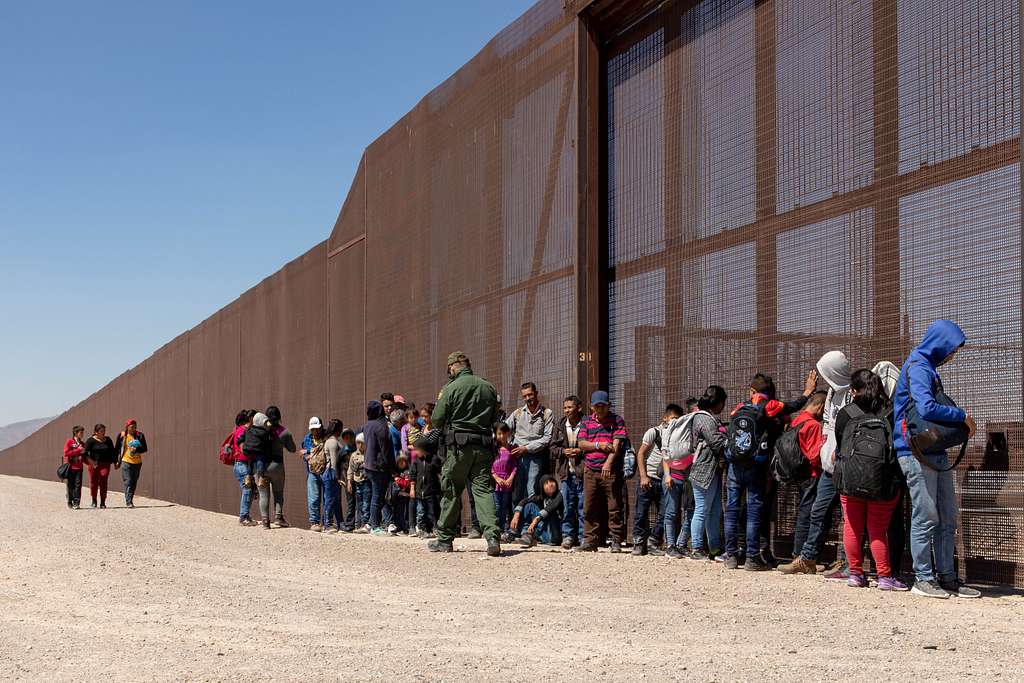
Image: NARA and DVIDS Public Domain Archive

By Blake Burdge

Mexico is sending murderers and rapists to the United States.

Tren de Aragua has invaded and seized apartment complexes in Aurora, Colorado with weapons better than the U.S. military’s.

MS-13, a street gang with U.S. origins, has organized itself transnationally with the discrete intention of sowing unrest throughout the United States.

The embellished outrage surrounding transnational crime and organized gang activity grows quiet once it has served its purpose – to criminalize migrants fleeing violence or the grim landscapes in their home countries created and maintained by an oppressive, dominant economic system. 
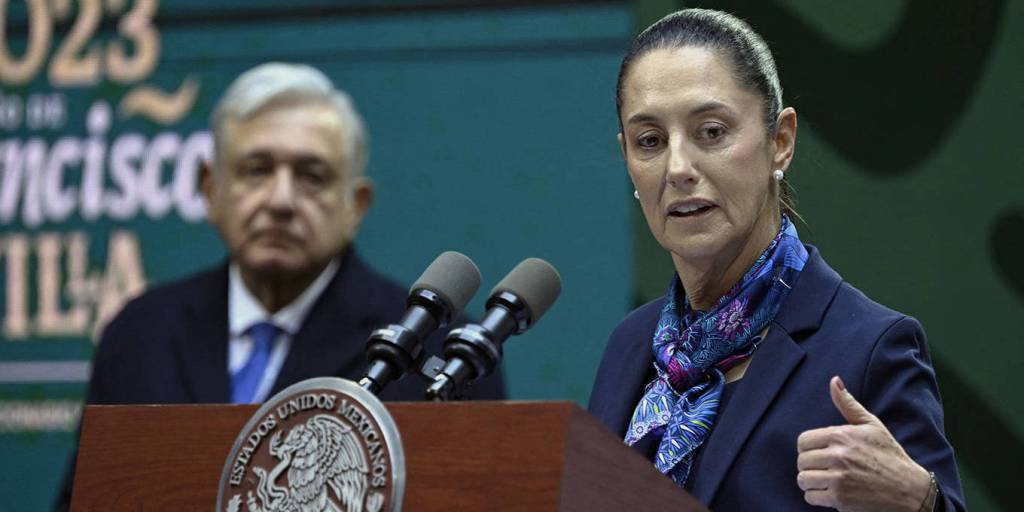
Image: Project Syndicate

By Jorge Heine

Already struggling to get out of its deepest economic downturn in 120 years, Latin America now must brace for the possibility of another Donald Trump presidency. Judging by the Republican candidate’s campaign promises and longstanding positions on trade and immigration policy, the implications would be dire.

After the euphoric Democratic National Convention in Chicago, there is little doubt that Kamala Harris’s candidacy has changed the dynamics of the 2024 US presidential race. Democrats now have a fighting chance, which is more than they could have said a few months ago. However, with polls still showing an extremely close contest in the seven swing states that ultimately matter, the rest of the world must brace for what Donald Trump’s return to the White House would entail.

Image: Project Syndicate

By Jorge G. Castañeda

Over the course of two centuries of independence, Mexico has elected its leaders democratically on only four occasions. Whether the presidential election in June will be fair and free is questionable, given that the playing field is heavily tilted in favor of the ruling party’s candidate.

Many countries, from the United States and Uruguay to India and Indonesia, will hold elections in 2024. Although pundits, politicians, and political scientists tend to portray each one as “historic” and “momentous,” Mexico’s June 2 presidential election may be one of the few to warrant such superlatives, if only because the country has limited experience with truly democratic votes.

Image: Project Syndicate

By José Antonio Ocampo

Latin America’s economies continued to be the worst-performing in the developing world in 2023. To boost economic growth, the region’s political leaders must increase their investments in science and technology, foster regional integration, and reaffirm their commitment to democratic governance.

Latin America has come to the end of its second lost decade of development. Average annual growth hovered just below 0.9% for the 2014-23 period – worse than the 1.3% rate in the 1980s. GDP per capita, however, is projected to be slightly higher in 2023 than in 2013, owing to slower population growth. By contrast, it was not until 1994 that the region’s GDP per capita returned to its 1980 level. Still, Latin America has a severe growth problem.

Image: Geoffrey A. Fowler/The Washington Post via Getty Images/Project Syndicate

By Anne-Marie Slaughter and Alberto Rodríguez Alvarez

Canada, Mexico, and the United States have a chance to forge a regional agenda to position North America as a global leader in digital government services. Having already established a solid foundation for cooperation, they must now build on it.

In Ukraine today and in many other conflicts around the world, the digital domain has become a battleground for cyberattacks and information warfare. Even in normal daily life, digital platforms can endanger citizens and democracies by encroaching on individual privacy, manipulating consumer attention, fostering social isolation, and nurturing extremism. But, while not downplaying these harms, we should also remind ourselves of the many good things that today’s new technologies offer.

Image: Project Syndicate

By Jorge G. Castañeda

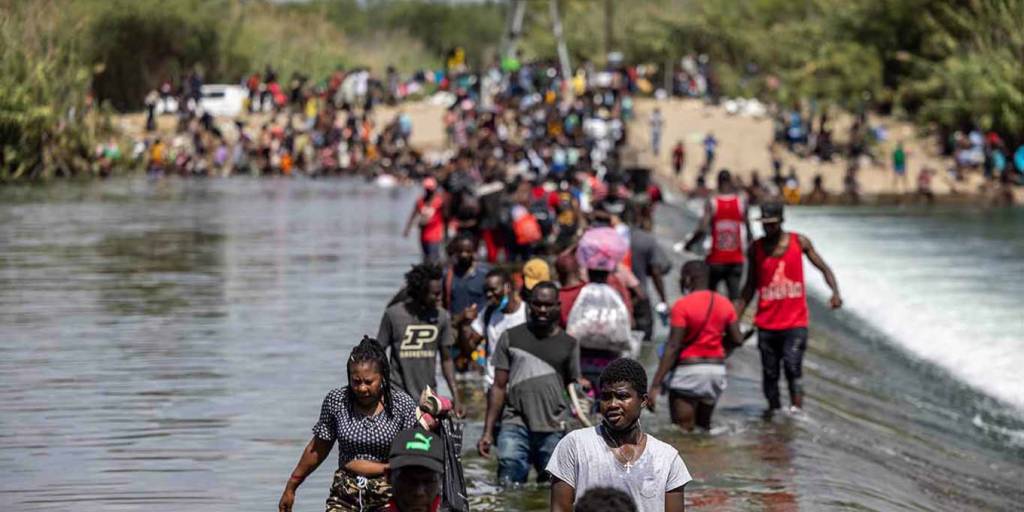
Since the first days of Joe Biden’s presidency, his administration has insisted that the growing number of migrants being apprehended at the US-Mexico border is not a “crisis,” but rather a normal, seasonal spike. US officials have even argued that the controversy was concocted entirely by former President Donald Trump and other Republicans.

While the Biden administration was not totally wrong about Trump, reality has since rebutted its claims. The situation on the border today is indeed a crisis, both for the United States and Mexico. As of late September, some 15,000 migrants and asylum seekers, most of them Haitian, are sheltering from the sun under the International Bridge in Del Rio, Texas. They have brought the migration issue roaring back to the fore.

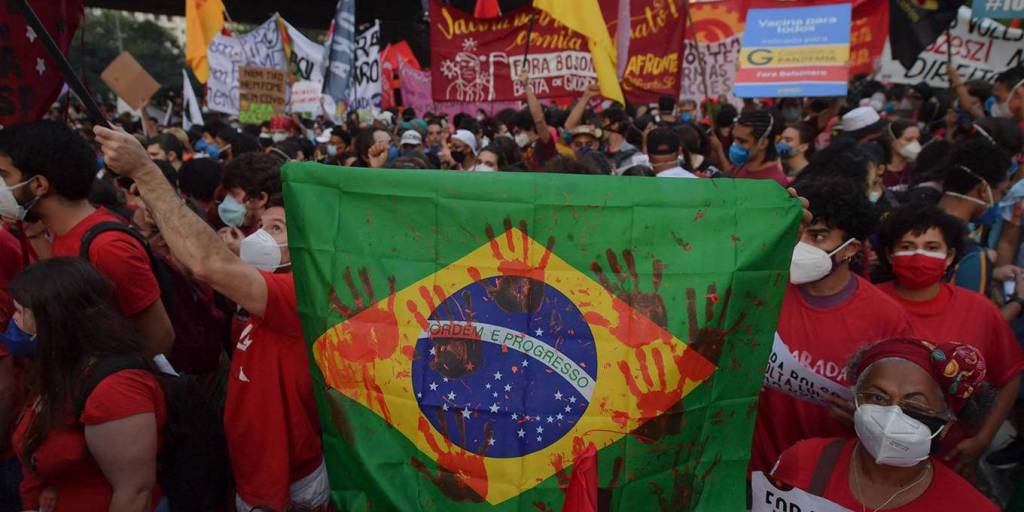
Demonstrators take part in a protest against Brazilian President Jair Bolsonaro’s handling of the COVID-19 pandemic in Sao Paulo, Brazil on May 29 2021. (Photo by NELSON ALMEIDA / AFP) (Photo by NELSON ALMEIDA/AFP via Getty Images)

By Kenneth Rogoff

Most of Latin America is still far from the horrific conditions prevailing in Venezuela, where output has fallen by a staggering 75% since 2013. But, given the ongoing humanitarian catastrophe there, and the specter of political instability elsewhere, investors should not take a sustained economic recovery for granted.

The current disconnect between market calm and underlying social tensions is perhaps nowhere more acute than in Latin America. The question is how much longer this glaring dissonance can continue.