Image: Project Syndicate

By Jorge G. Castañeda

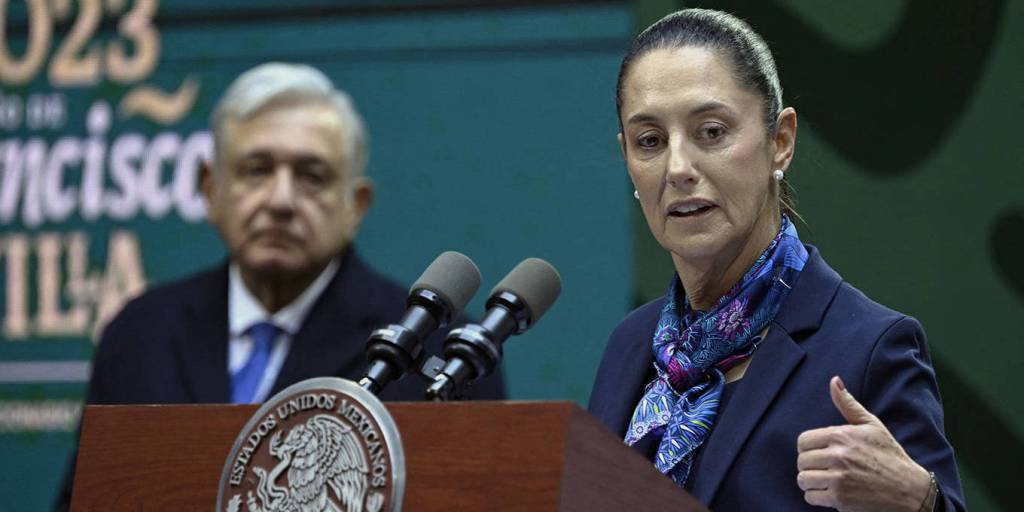
Over the course of two centuries of independence, Mexico has elected its leaders democratically on only four occasions. Whether the presidential election in June will be fair and free is questionable, given that the playing field is heavily tilted in favor of the ruling party’s candidate.

Many countries, from the United States and Uruguay to India and Indonesia, will hold elections in 2024. Although pundits, politicians, and political scientists tend to portray each one as “historic” and “momentous,” Mexico’s June 2 presidential election may be one of the few to warrant such superlatives, if only because the country has limited experience with truly democratic votes.

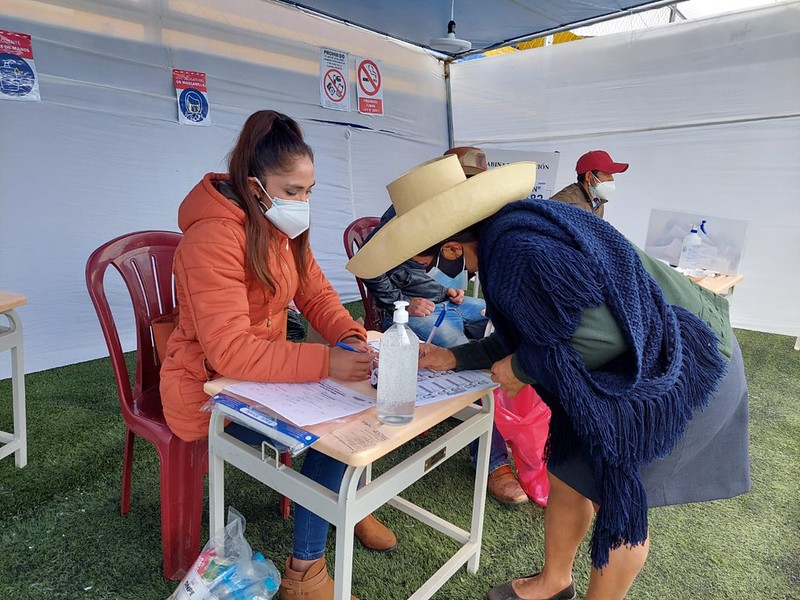
Image: The Conversationalist

By Linda E. Moran, Ph.D.

Alex Seitz-Wald (2019) maintains that the most unknowable factor of presidential elections is electability and, more specifically, perceptions of electability. Their role in the surprising outcomes of two Chilean elections — Michelle Bachelet’s in 2005 and Gabriel Boric’s in 2021 — provides the scaffolding for analysis. The combination of failed strategies on the part of the predicted winners and unprecedented breakthroughs on the part of the actual winners created a conundrum for those with expertise on the topic of Chilean sociopolitical behavior. Why were predictions so wide of the mark? In search of an explanation, this essay shifts the focus from standard conversations about anomalies and contradictions to premises at the core of notions of electability. It suggests that the unexpected outcomes of the two elections under scrutiny can be attributed to flaws in five of the premises commonly used to assess electability.

By Erika Quinteros

Pedro Castillo has defeated Keiko Fujimori by 44,058 votes. That doesn’t mean the electoral battle is over.

With 100% of Peru’s votes counted, the country has a new president-elect. But will Pedro Castillo have a chance to govern?

On June 6th, Peruvians went to the polls to elect a president in a runoff election between right-wing candidate Keiko Fujimori and left-wing contender Pedro Castillo. The night of the elections, the pollster Ipsos gave the first quick count – a method that consists of counting a representative sample of the country’s votes in the presence of the electoral authorities – which showed Castillo ahead with 50.2% of the votes.

File:Manifestaciones en Bolivia 2019 (6).jpg

By Alexia Rauen and Alexandra Snodgrass

Bolivia will hold presidential elections on October 18, 2020, after numerous delays and an interim unelected presidency after the October 2019 elections. The nation’s former president, Evo Morales, who ruled land-locked Bolivia from 2006 to 2019, will not be running after a dramatic resignation. Instead, the election pits Luis Arce, the candidate of Morales’s party, against the ex-president Carlos Mesa. 

Bolivia had previously limited presidents to two consecutive terms. However, in 2013, Morales was able to run for a third term after it was found that the introduction of a new constitution in 2009 made his first term moot for counting purposes. In 2016, a referendum on whether or not to change the constitution to allow Morales to run again failed to yield results in his favor. This was reversed by Bolivia’s Plurinational Constitutional Tribunal, who ruled that term limits no longer existed for any elected official. Morales announced his candidacy for the 2019 Bolivian presidential elections in May of 2019. Luis Almagro, head of the Organization of American States (OAS), stated that given the tribunal’s ruling, Morales should be allowed to run. The election was held in October of 2019, and Morales needed a 10-point lead in order to prevent a runoff election. When Bolivia’s Supreme Electoral Tribunal released results with 83% of the vote counted, Morales was in the lead – but not enough to prevent a runoff.  Then, the website went dark, and when it returned, Morales had won by just over 10 points. The OAS released a report on November 10, 2019 that found the election’s “process was contrary to best practices and failed to abide by security standards … Given the irregularities observed, it is impossible to guarantee the integrity of the data and certify the accuracy of the results.” The post-election public outrage led to weeks of protests and Morales’s resignation. 

William ArrochaDr. William Arrocha, Assistant Professor at the Middlebury Institute of International Studies at Monterey, recently shared his expertise and thoughts on compassionate migration, DACA, the upcoming presidential elections in Mexico, and what truly makes us human with Open Americas.
Can you describe your background? How did you become interested in the field of international policy and more specifically in U.S./Mexico relations, migration, and human rights?

I am an eternal migrant, born from immigrant parents in Mexico City, a place where many worlds have met, clashed and thrived for centuries. As someone born within an international and multicultural family, my reason for being will always involve more than one country or place. As the Argentina poet Facundo Cabral once said, “I’m not from here… I’m not from there.”

Being born in Mexico to an American mother and a Mexican father always placed me in the confines of U.S.-Mexico relations. Being raised in a family with parents engaged in the realms of the law, social justice, and human rights, studying in the French system during all my formative years and at my bachelors at the National Autonomous University of Mexico could not have taken me to any other path than that of an internationalist.

By Alexandra Snodgrass

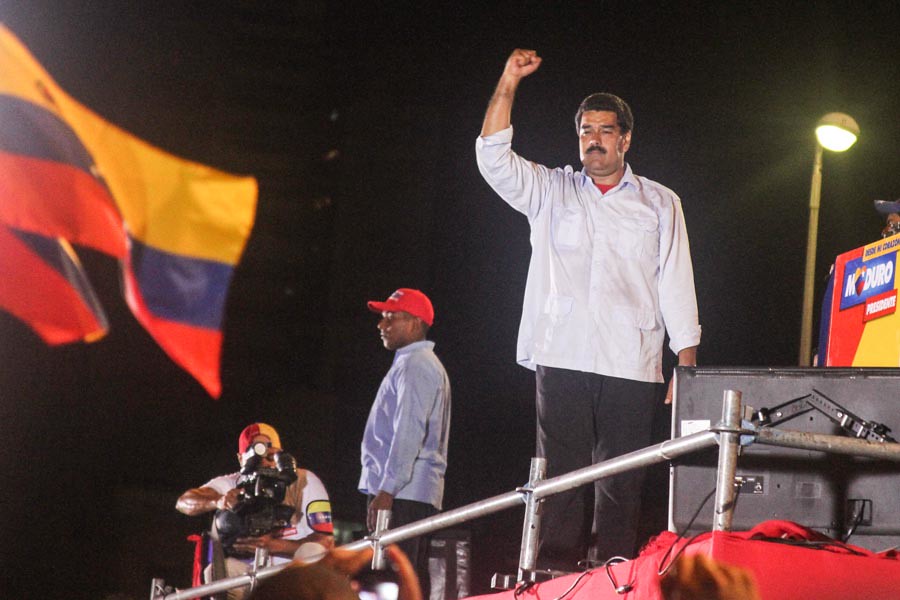
With Venezuela’s elections rescheduled to May 20, President Nicolás Maduro has a long road ahead of him in gaining the support of his citizens. Elections were originally intended to be held April 22, but the National Election Council (CNE) made a last minute decision to push the election date back by one month. The call for a snap election still has some suspecting it was to ensure Maduro’s victory while his opponents largely have no stable footing to run on or are banned from running. A key indicator of Maduro’s future success can be found in the municipal elections, which were held on December 10, 2017. Maduro’s socialist party won 300 of the 355 seats in the overwhelming majority of the municipalities.  

By Alexia Rauen

Paraguay’s political system has long been dominated by the Colorado Party (Asociación Nacional Republicana – Partido Colorado, ANR-PC). The Colorado Party is pro-West, and has historically – and into present day – restricted civil liberties and stifled opposition parties. This party stems from a brutal 35-year long dictatorship under military leader Alfredo Stroessner, and has retained power for 61 years, controlling the parliament even when Stroessner was removed by a coup in 1989. The Colorado Party has consistently held the presidency except for a brief stint from 2008-2012, which ended in impeachment. The party also holds a majority in the larger branch of Congress, the Chamber of Deputies, and a near-majority in the Senate.