Image: Project Syndicate

By Sonia Guajajara

As co-hosts for this year’s United Nations Climate Change Conference in Belém, the Indigenous peoples and local communities of Brazil’s Amazon region understand what is at stake and will be given a greater voice than ever before. That is good news not only for these communities, but for everyone.

This year’s United Nations Climate Change Conference (COP30) in Belém, Brazil, has been eagerly awaited worldwide. A COP in the Amazon raises expectations for all those who recognize the urgency of climate change and its impact on our lives and environment. That is why Brazilian President Luiz Inácio Lula da Silva is calling this the “COP of Truth.”

Image: The Conversationalist

By Linda E. Moran, Ph.D.

Alex Seitz-Wald (2019) maintains that the most unknowable factor of presidential elections is electability and, more specifically, perceptions of electability. Their role in the surprising outcomes of two Chilean elections — Michelle Bachelet’s in 2005 and Gabriel Boric’s in 2021 — provides the scaffolding for analysis. The combination of failed strategies on the part of the predicted winners and unprecedented breakthroughs on the part of the actual winners created a conundrum for those with expertise on the topic of Chilean sociopolitical behavior. Why were predictions so wide of the mark? In search of an explanation, this essay shifts the focus from standard conversations about anomalies and contradictions to premises at the core of notions of electability. It suggests that the unexpected outcomes of the two elections under scrutiny can be attributed to flaws in five of the premises commonly used to assess electability.

Image: Flickr

By Maura Masterson

Every American citizen becomes aware of reproductive topics at some point, most likely during adolescence. This is a simple statement, but when examined further, one realizes that although everyone has this fact in common, how and what one learns varies. Sex education in the United States has been a contentious topic, and has not experienced linear progress. Whether it be the appropriate age to learn about sex and bodily changes, whether or not sex-education has a place in public school curriculum, and what schools are allowed to teach are all points of debate surrounding sex-ed. Influenced by gender roles, state and federal governments, the HIV/AIDS epidemic, and religion – particularly Christianity – the U.S. has experienced many different phases of sex education. By analyzing sex education resources from different time periods, data on teen pregnancies and sexually transmitted diseases (STDs), and scholarly essays on consequences of different curricula, it becomes evident the most effective sex education leads to a better understanding of relationships, sexuality, and the human body. This form of education is known as “comprehensive sex education” and is generally more progressive and developed, since its curriculum covers the importance of contraception and consent – and does not rely on an abstinence-only curriculum. What children and teenagers learn is extremely important because it not only affects their sexual health, but also their views of their sexuality and role in society.

Créditos de la imagen: Salwan Georges

Traducido por Pilar Espitia

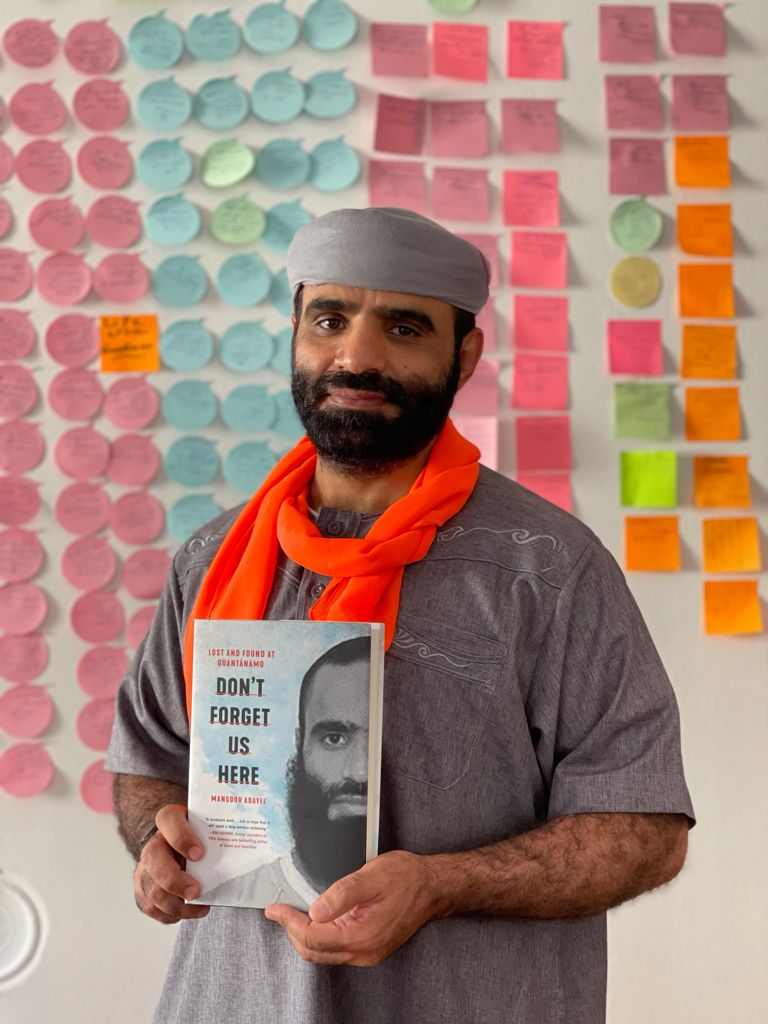
Hace poco tuvimos el placer de sentarnos a conversar virtualmente con Mansoor Adayfi, autor de “Don’t Forget Us Here: Lost and Found at Guantánamo” [“No se olviden de nosotros: De cómo me perdí y me encontré en Guantánamo”]. Mansoor es activista, ex-prisionero de Guantánamo y actualmente reside en Serbia. A la edad de tan solo dieciocho años, fue secuestrado en Afganistán y vendido al gobierno de los Estados Unidos. Retenido en Guantánamo por catorce años, fue torturado y despojado de sus derechos más básicos.

Hablamos con Mansoor sobre lo que le diría a la versión más joven de sí, si pudiera volver en el tiempo, sobre su vida en Serbia y su reciente graduación de la universidad. Como gestor de proyectos de la ONG llamada CAGE, Mansoor y sus antiguos compañeros de prisión, o sus “hermanos”, han publicado un plan de ocho puntos para instruir al Presidente Biden sobre cómo cerrar Guantánamo de forma apropiada. Alrededor del cuello, Mansoor portaba un pedazo de tela naranja para simbolizar su solidaridad con sus hermanos y explicó sus planes para defender el cierre de Guantánamo hasta que sus hermanos fueran libres. Mientras Mansoor hablaba con convicción y humor, llamando al silencio “la herramienta de los opresores”, poco a poco se volvió claro que su voz será un instrumento poderoso de la justicia en los años venideros.


Photo Credit: Salwan Georges

We recently had the pleasure of sitting down virtually with Mansoor Adayfi, the author of Don’t Forget Us Here: Lost and Found at Guantánamo. Mansoor is an activist and former Guantánamo detainee now residing in Serbia. At the age of only eighteen, he was kidnapped in Afghanistan and sold to the U.S. government. Held in Guantánamo for fourteen years, he was tortured and deprived of his basic human rights.

We talked with Mansoor about what he would go back and tell his younger self, his life in Serbia, and his recent college graduation. Now the Guantánamo Project Manager at the NGO CAGE, Mansoor and fellow former detainees, or “brothers,” have published an eight-point plan to instruct President Biden on how to properly close Guantánamo. Wearing a bright orange cloth around his neck out of solidarity for his brothers, Mansoor explained his plans to advocate for the closure of Guantánamo until they were free. As he spoke with conviction and humor, calling silence “a tool of the oppressors,” it became increasingly clear: Mansoor’s voice will be a powerful instrument of justice for years to come
.


Escrito por Alexia Rauen

Traducido por Pilar Espitia

El texto autobiográfico de Mansoor Adayfi publicado en 2021 Don’t Forget Us Here: Lost and Found at Guantánamo [No se olviden de nosotros: De cómo me perdí y me encontré en Guantánamo] transporta a los lectores a la bahía de Guantánamo en Cuba, a un mundo en el que niños y adultos son torturados de forma rutinaria por los Estados Unidos. La bahía de Guantánamo es una base naval en posesión de Estados Unidos desde 1903. Adayfi pasó su niñez en las montañas idílicas de Yemen1 con sueños de estudiar en los Emiratos Árabes Unidos.2 Cuando Adayfi tenía 18 años, viajó a Afganistán en un viaje de investigación para un importante jeque que le prometió una carta de recomendación para la universidad a cambio de su trabajo.3 En ese entonces, los Estados Unidos ofrecían recompensas por atrapar a combatientes talibanes y de Al-Qaeda; Adayfi fue capturado y vendido por caudillos que lo obligaron a decir que era un miembro de Al-Qaeda o que, sino, los estadounidenses lo matarían.4 A su vez, los estadounidenses capturaron a un muchacho yemení de 19 años y reinventaron la narrativa de quién era. Se convencieron de que era un general egipcio mayor (“incluso creían que [el general] se había hecho una cirugía plástica para verse jóven y diferente, supongo, para que se pareciera a mí”) y lo torturaron por años para obtener información que él de ningún modo podía poseer.5 

By Alexia Rauen

Mansoor Adayfi’s 2021 memoir, Don’t Forget Us Here: Lost and Found at Guantánamo, transports readers to Guantánamo Bay, Cuba, to a world in which children and adults are routinely tortured by the United States. Guantánamo Bay has been a naval base in U.S. possession since 1903. Adayfi spent his childhood in the idyllic mountains of Yemen1 with dreams to study in the United Arab Emirates.2 When Adayfi was eighteen years old, he traveled to Afghanistan on a research trip for an important sheik in Yemen who promised him a university reference letter in exchange for his work.3 With the United States offering bounties for Al-Qaeda and Taliban fighters, Adayfi was captured and sold by warlords who instructed him to say he was a member of Al-Qaeda, or else the Americans would kill him.4 The Americans, in turn, took a nineteen-year-old Yemeni boy and reinvented the narrative of who he was. They convinced themselves he was an older Egyptian general (“they even believed [the general] had plastic surgery to look young and different, I guess to look like me”) and tortured him for years in search of information he couldn’t possibly possess.5